Cwmbran New Town
A 1998 study of Cwmbran New Town’s architecture and privately controlled public space. This research developed into Urban Utopia.
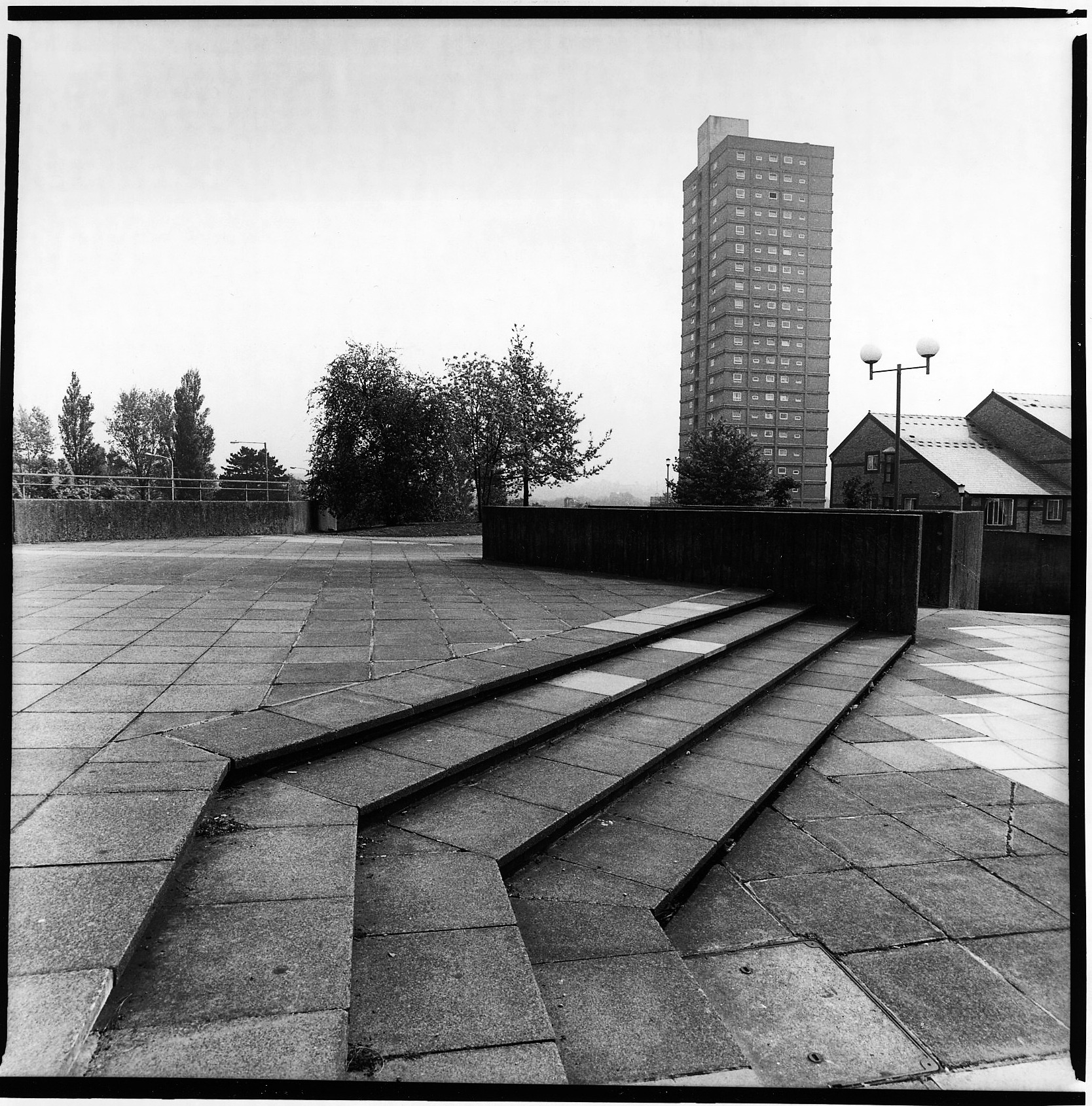
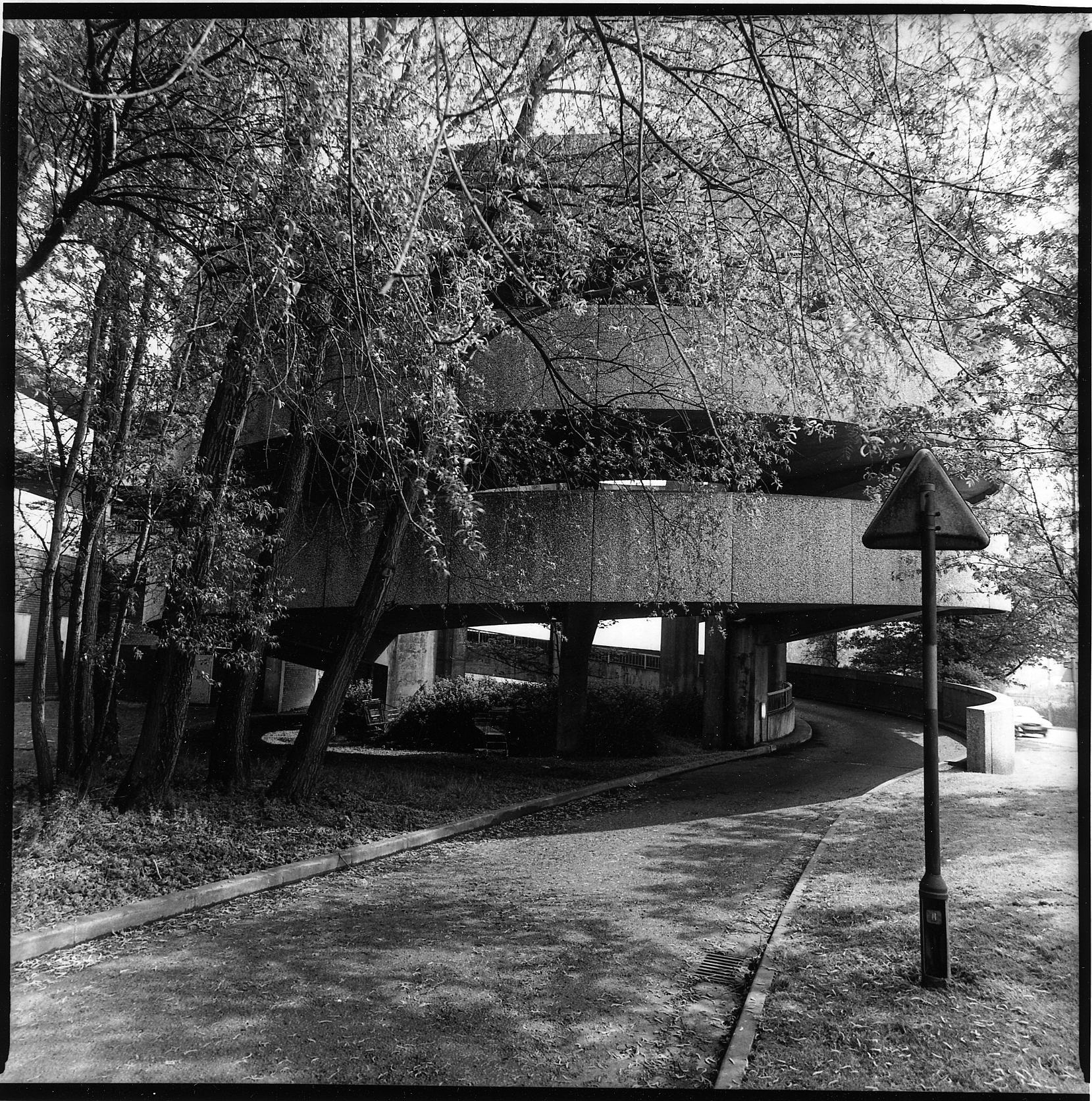
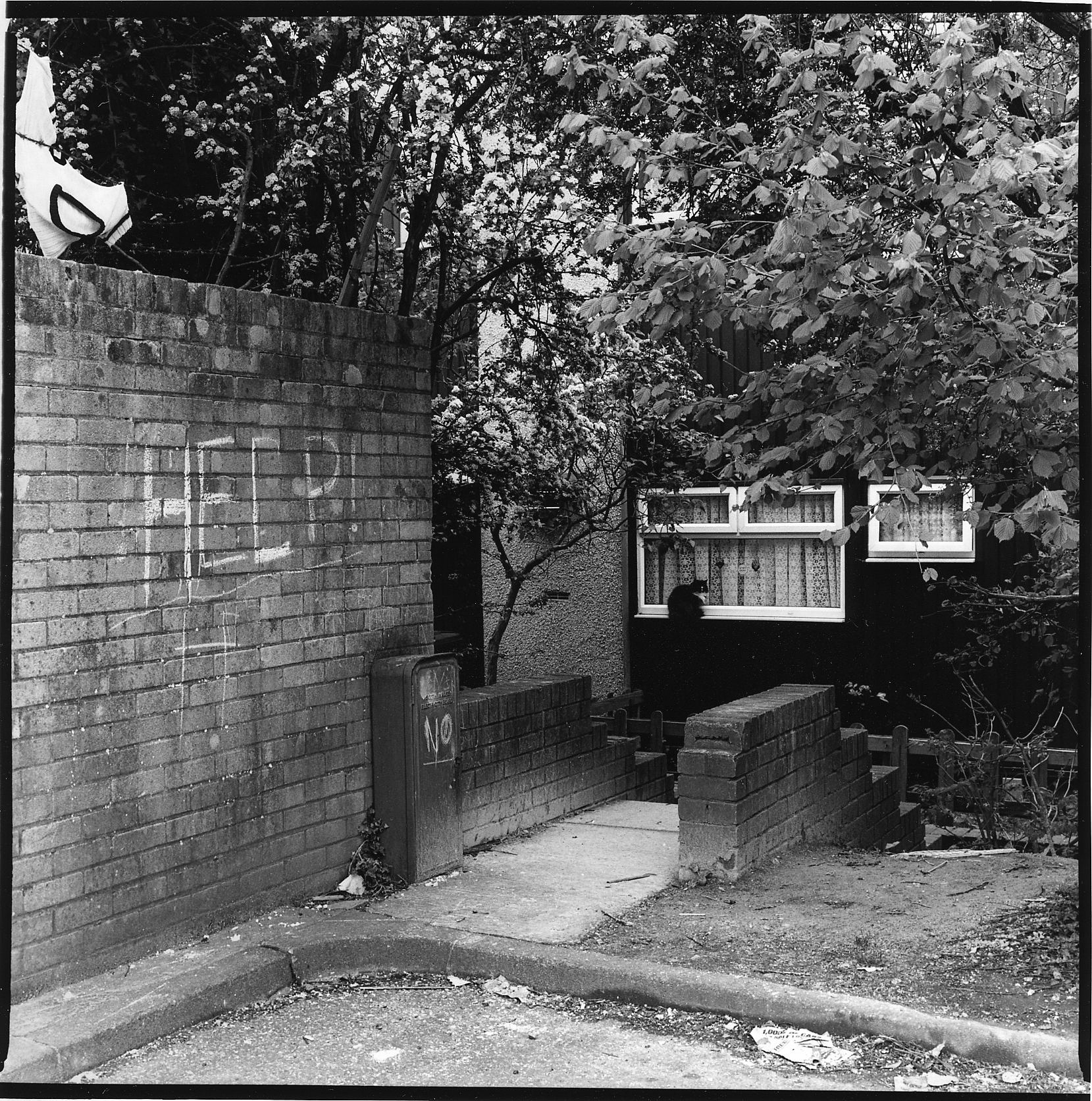
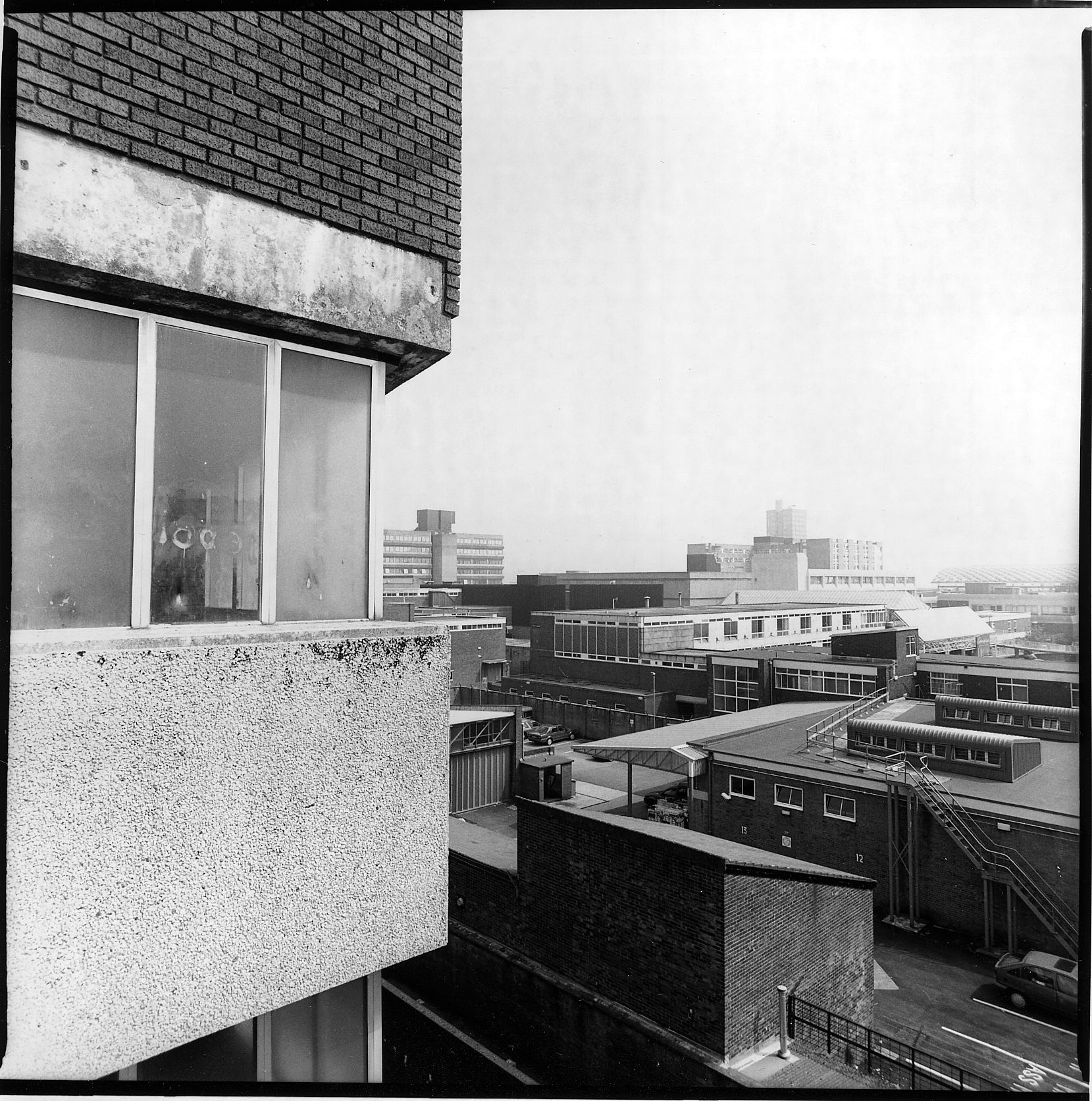
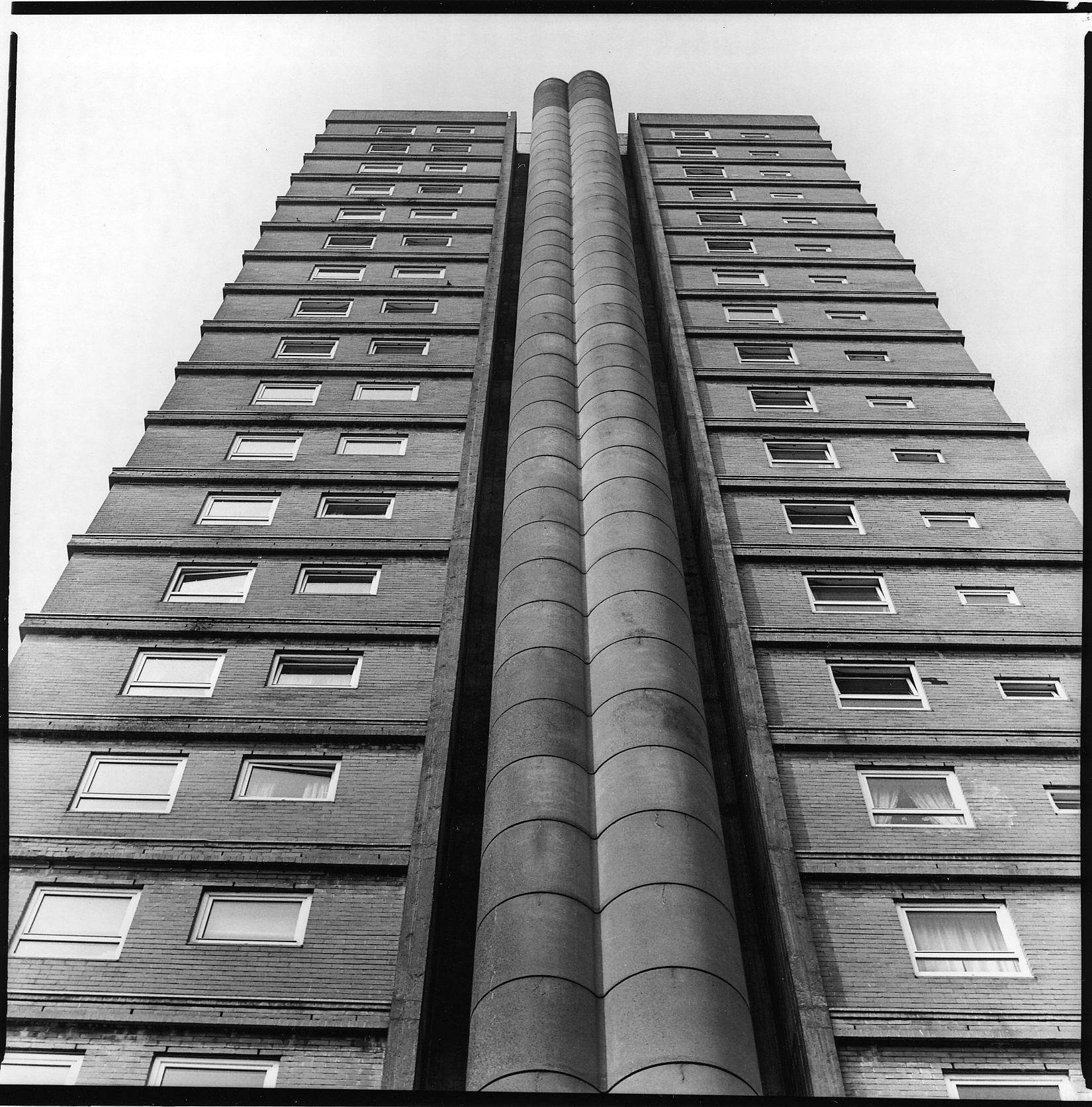
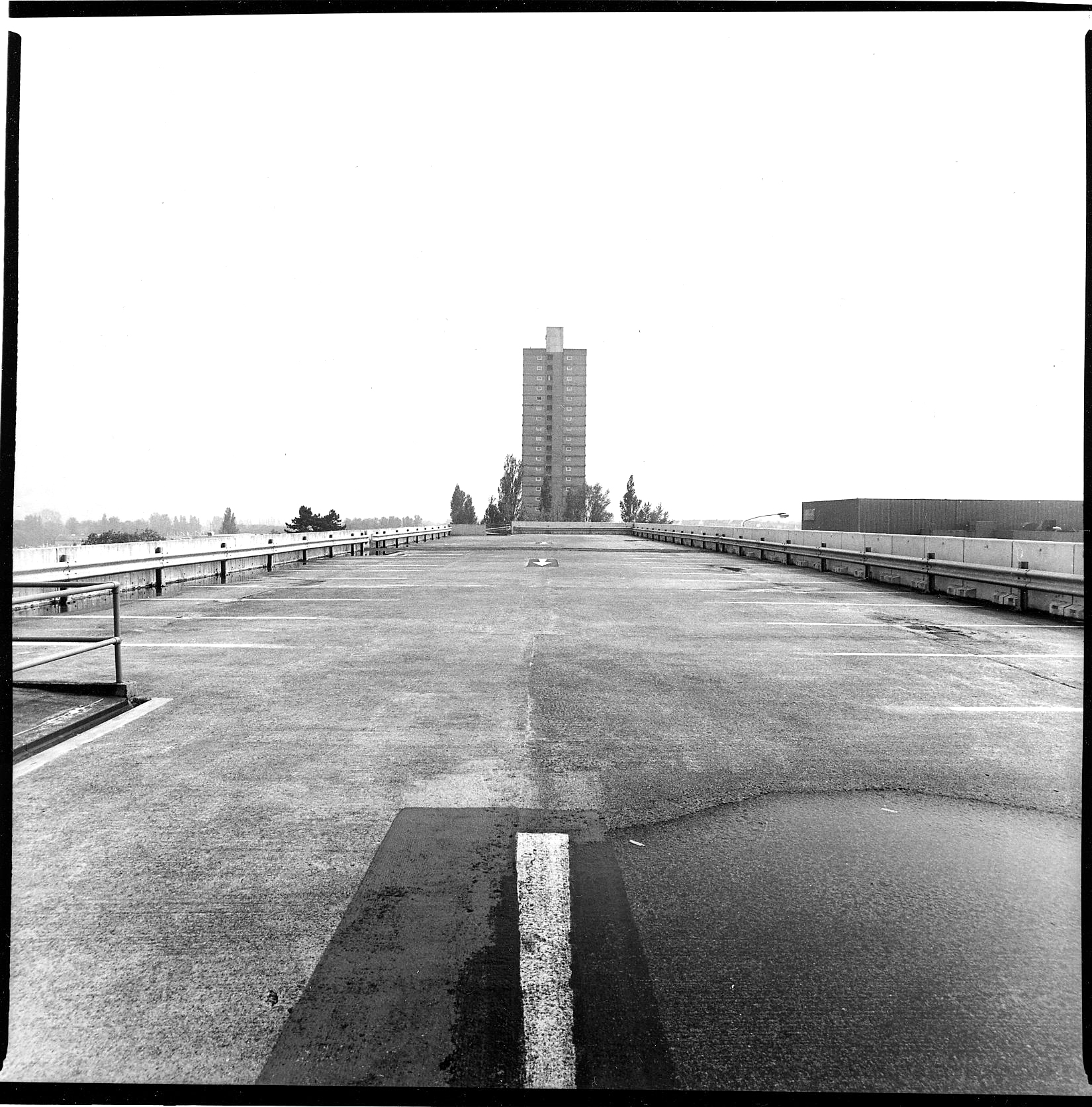
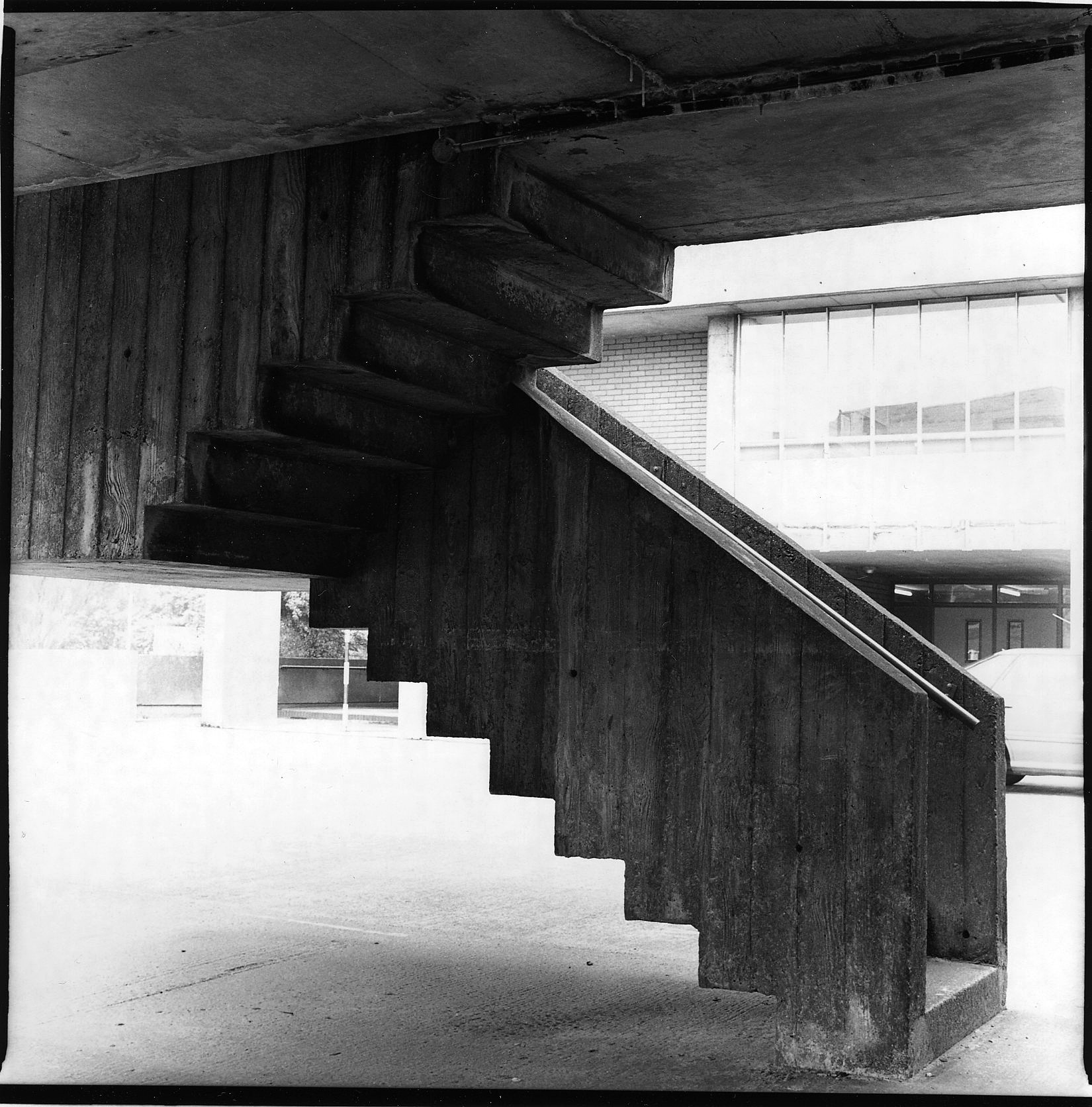
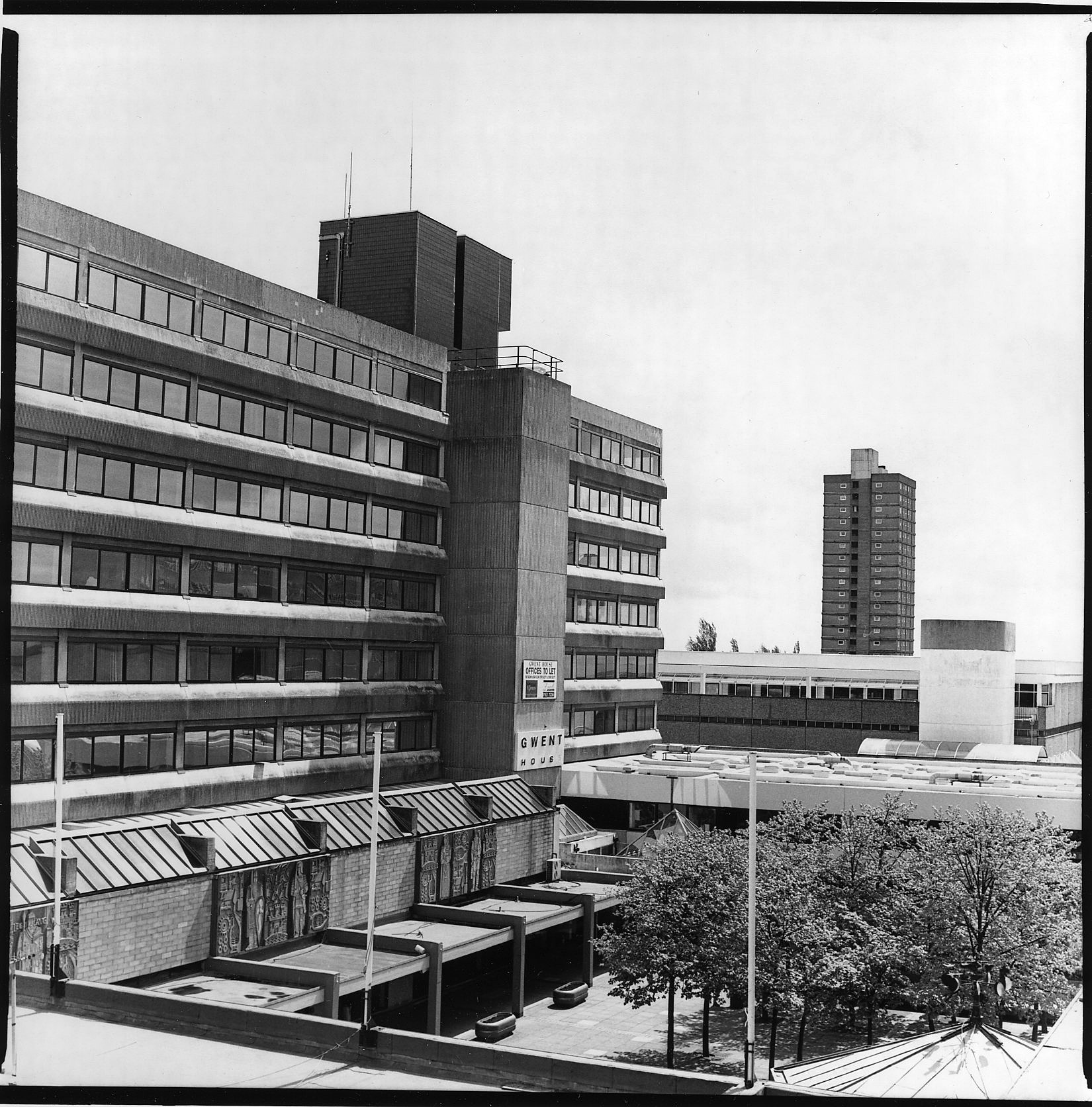
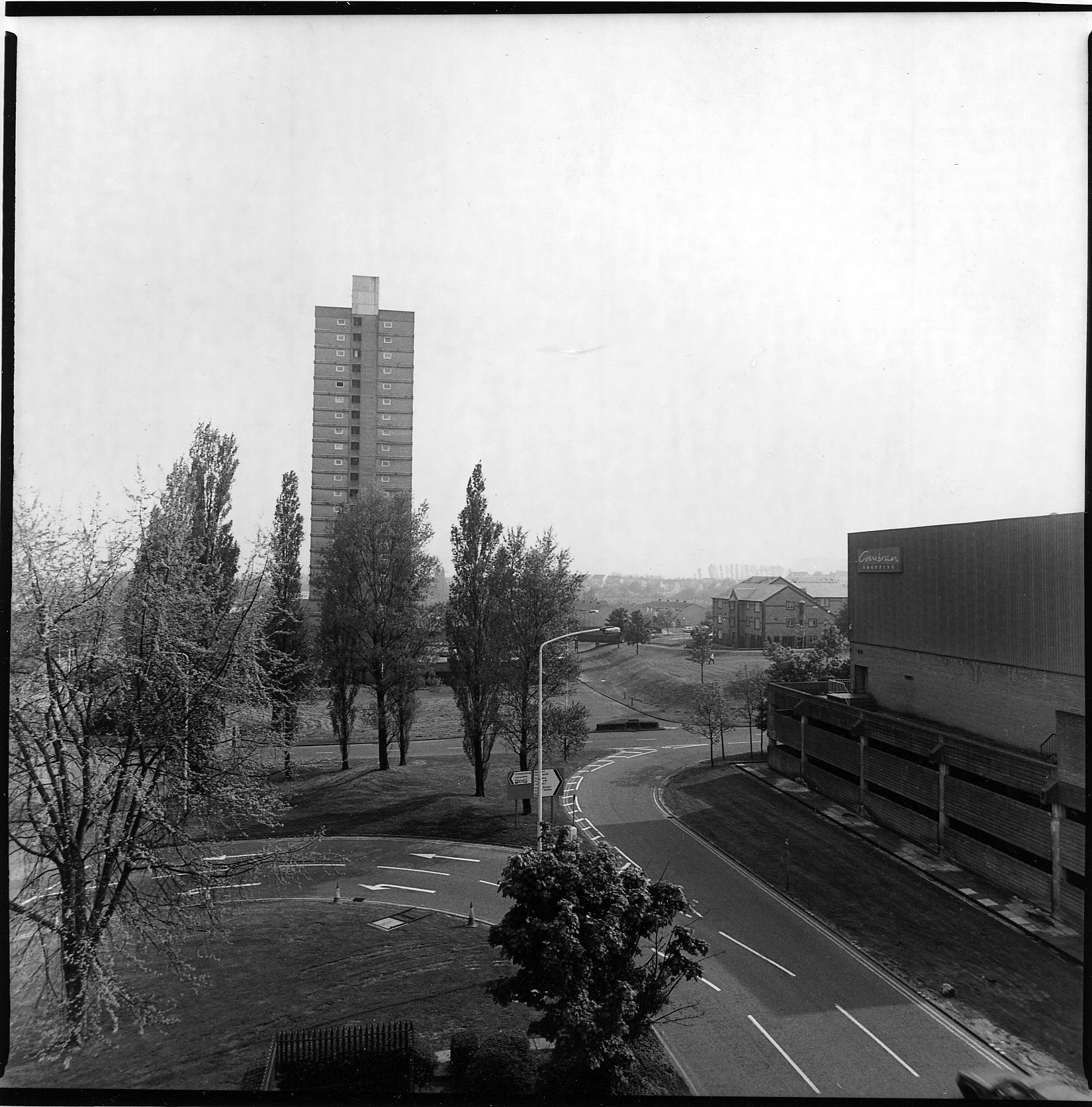
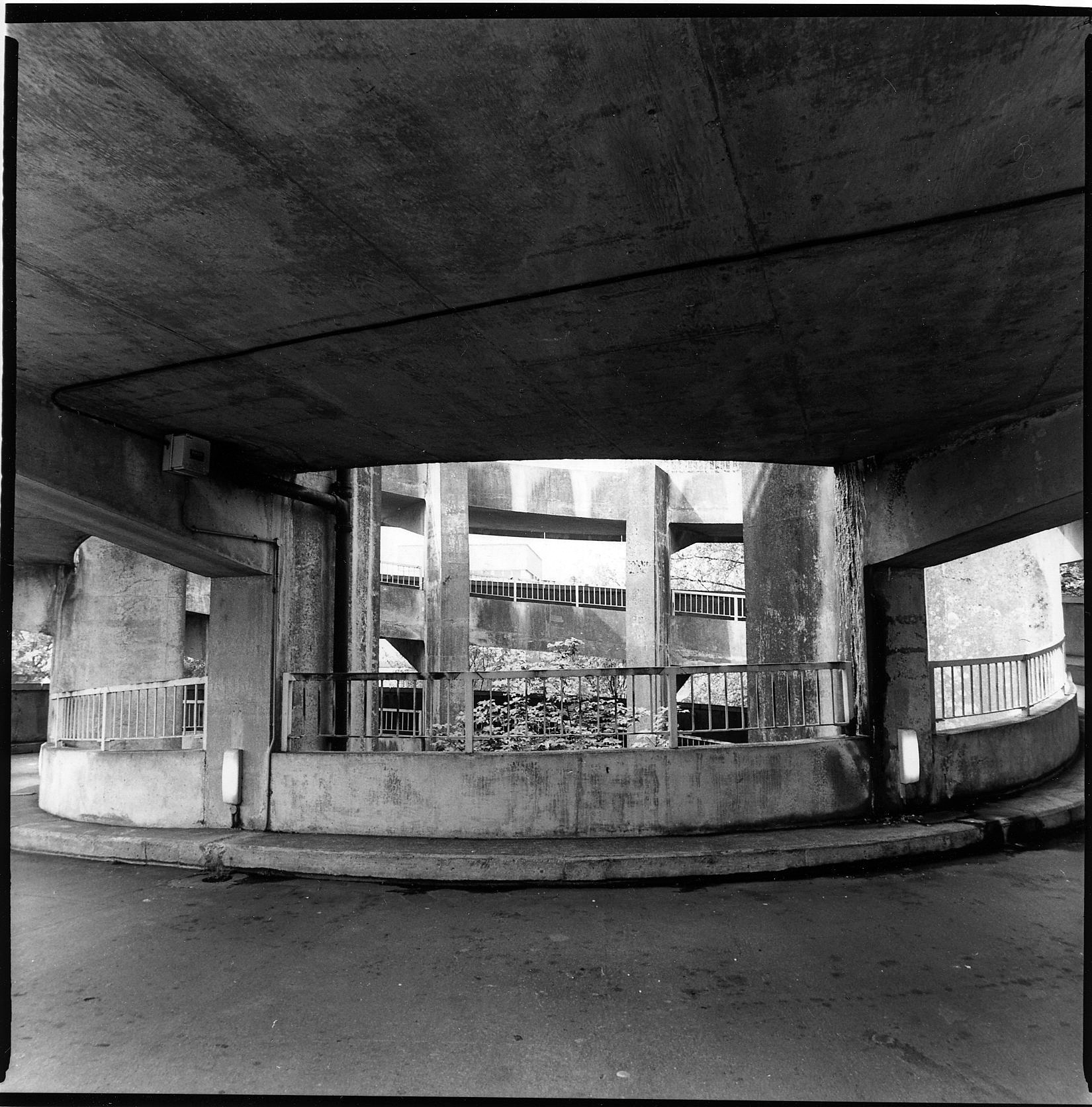
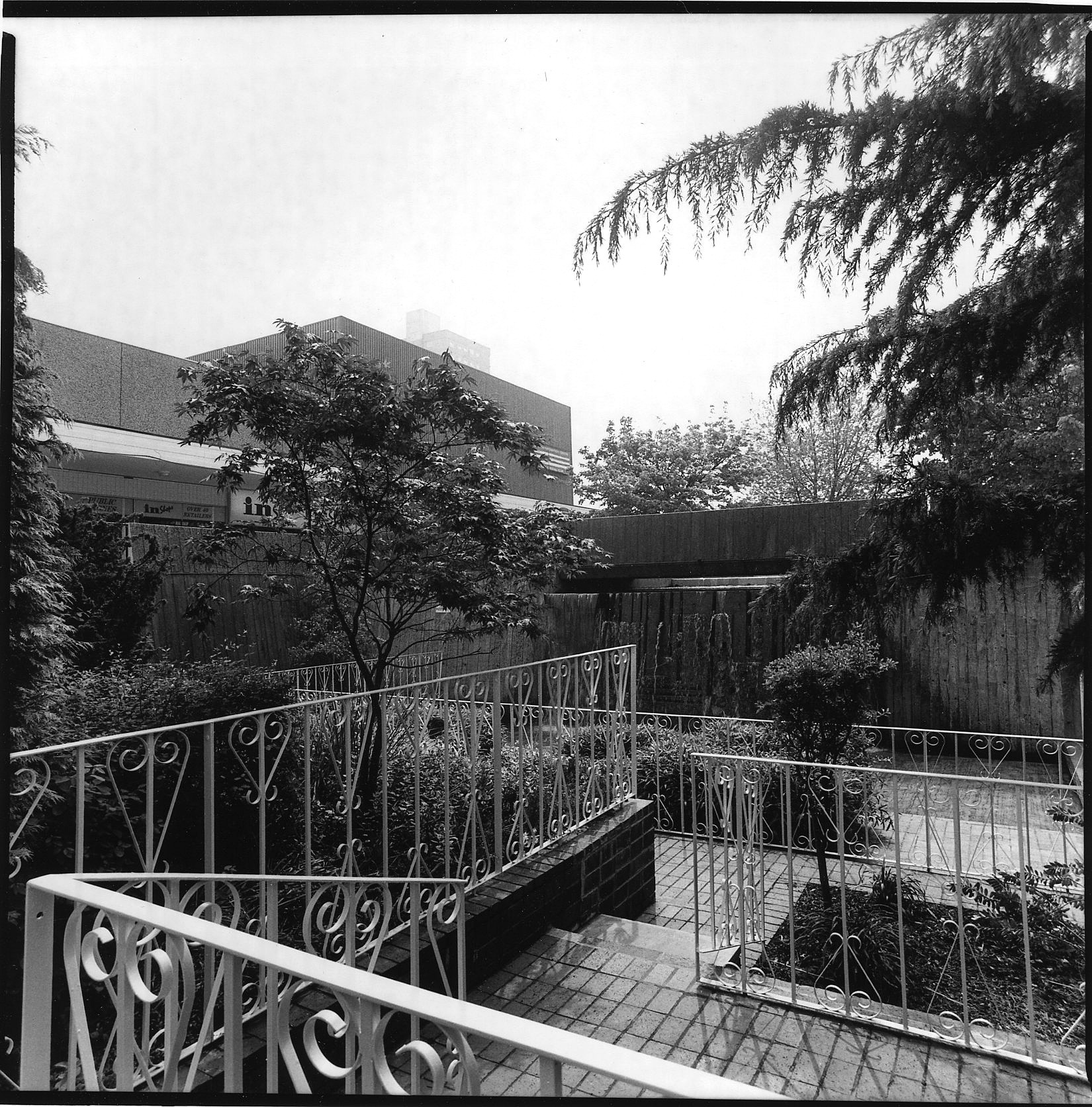
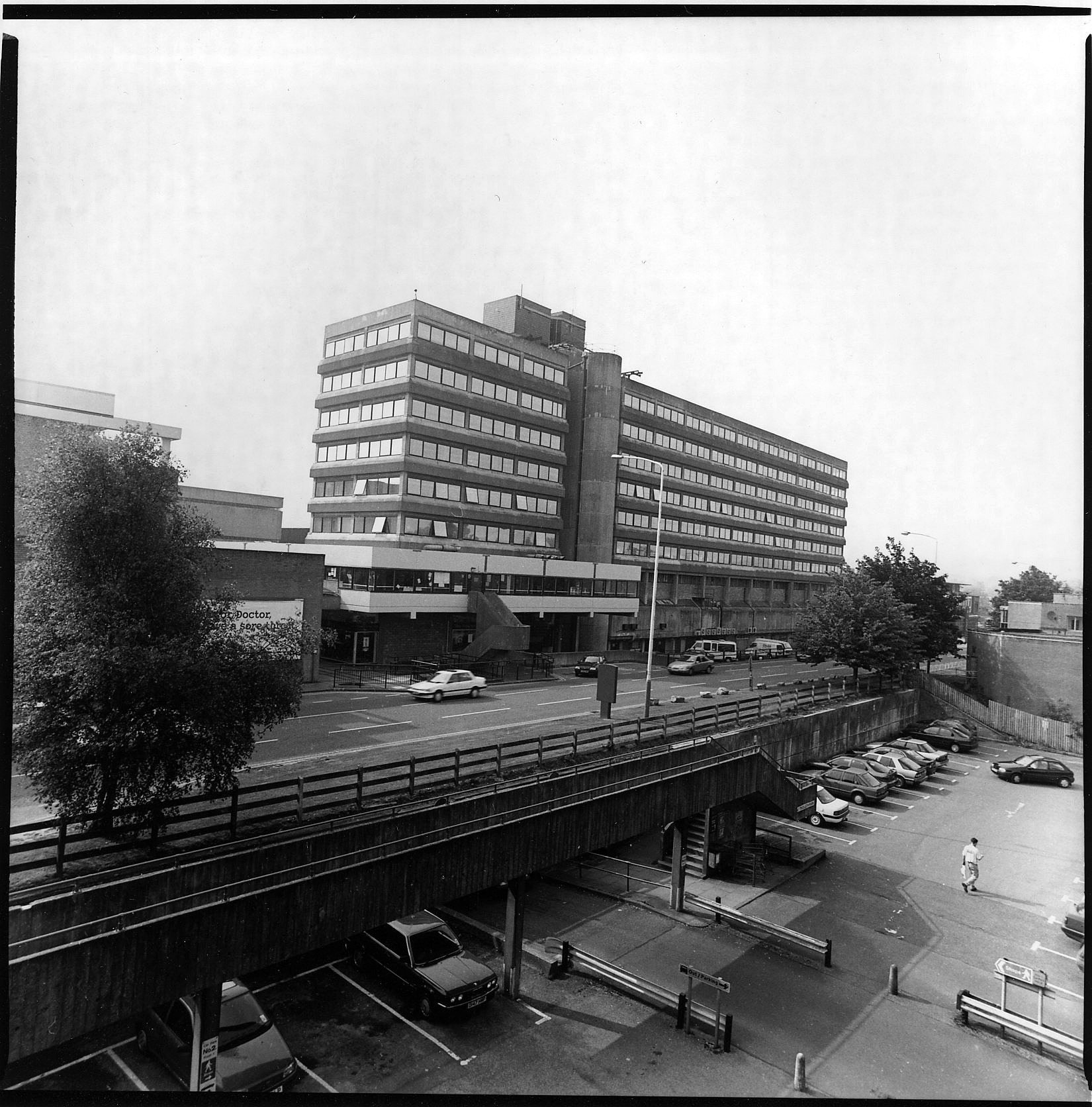
Cwmbran was the first New Town in Wales, designated in 1949 under the New Towns Act 1946 to bring new employment to the south-eastern part of the South Wales coalfield. Its masterplan was drawn up by Minoprio & Spencely with P. W. Macfarlane; Anthony Minoprio had already planned Crawley. The pedestrianised town centre at its heart opened in 1959, and building went on into the 1980s before the Development Corporation was wound up in 1988 and the town centre was sold to a private company. Its towers, pedestrian routes, concrete stairways and open squares express a belief that architecture could shape a better everyday environment.
Rob Meighen was fascinated by the idea that a whole town could be conceived, planned and built from nothing: a utopian ideal on his doorstep. He chose to work in a cool, detached way in order to critique it, using a medium format camera and slow black-and-white film to record every detail, as if re-examining the architects’ plans. The approach drew on the New Topographics photographers and their deadpan, apparently styleless record of a man-altered landscape, among them Lewis Baltz, Robert Adams, Stephen Shore and Bernd and Hilla Becher, and on Ed Ruscha’s artist books of gasoline stations and parking lots.
While making these photographs in 1998, Meighen had to negotiate permission to photograph within the privately owned town centre. This requirement exposed a tension in the place itself: streets and squares that functioned as the shared centre of a community were also spaces under private management.
That experience raised questions about what makes a place public. Being able to enter a space does not necessarily mean having a voice in how it is used, controlled or represented. For Meighen, this reflects a wider tension within late capitalism, where the places of collective everyday life are also commercial assets, and public use remains subject to private priorities.
This project marked the beginning of his research into the new towns programme established by the New Towns Act 1946. Cwmbran’s architecture, together with his experience of negotiating photographic access, prompted questions about the relationship between planning, public life and private ownership. That research developed into Urban Utopia, extending the investigation beyond Cwmbran to explore the architectural ambitions and lived environments of Britain’s new towns.